

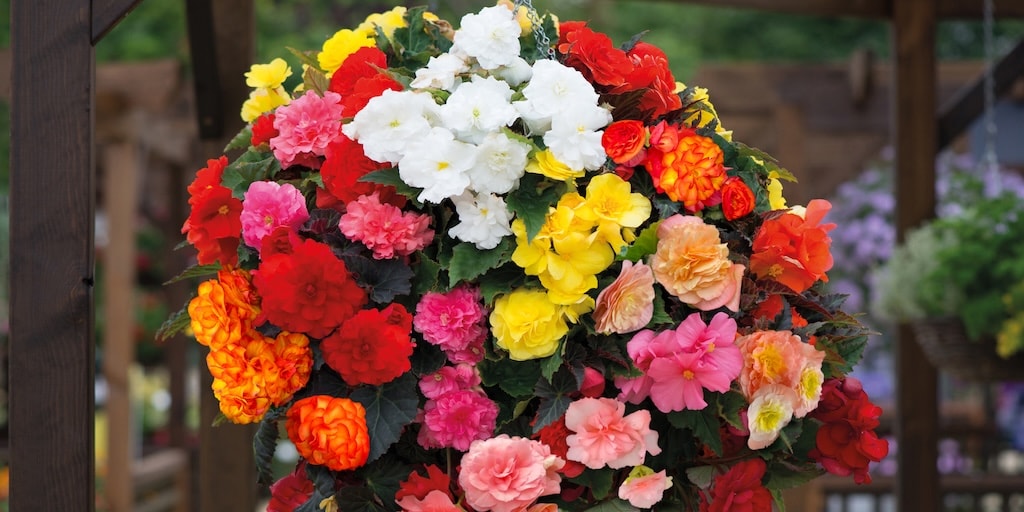
Begonias are one of the most reliable summer performers in the British garden. They flower from June right through to the first frosts, tolerate shade better than almost any other bedding plant, and come in an extraordinary range of colours and forms. If you’ve ever wanted bold, long-lasting colour in a spot where other plants struggle, begonias are the answer.
Here’s everything you need to know, from choosing the right begonia plants to getting the most from your begonia tubers year after year.
Choosing your begonias: plants or tubers?
The first decision is which type of begonia to buy – plants or tubers. Both options have real merit, and the right choice depends on your time, budget, and experience.
- Begonia tubers: This is the most economical choice for confident gardeners. Start them indoors in late winter and they’ll reward you with plants that grow bigger and more floriferous each year. The same tuber can last a decade or more.
- Begonia plants: Plug plants or pot-grown begonia plants cost more upfront but save time. Buy them in spring, harden off, and plant out after the last frost. Perfect if you want instant results or don’t have space to start from scratch.
What are the main types of begonia plants?

Image: Begonia rex ‘Moulin Rouge’ from Dobies
Few plants match what begonia plants deliver in a British garden: months of continuous colour, remarkable shade tolerance, and varieties to suit every style. From the huge, blowsy blooms of exhibition tuberous begonias to the neat, carpet-forming semperflorens, there are many types from which to choose:
- Tuberous begonias are the classic choice: large, rose-like blooms in upright or trailing forms, available in virtually every colour. They prefer dappled shade and are ideal for containers, borders, and hanging baskets.
- Semperflorens (wax begonias) are smaller-flowered and tougher. They handle more sun than other types and are excellent for low-maintenance summer bedding. Their waxy, dark foliage makes them attractive even when not in full flower.
- Rex begonias are grown for their striking patterned foliage rather than flowers. Best planted in sheltered spots or containers, they should be treated as a houseplant over winter.
When to plant begonias
Begonia plants and tubers are frost-tender, so timing is critical.
- Start begonia tubers indoors: in late February to March, at 18–20°C
- Plant outside: after the last frost, typically in late May in the south of the UK, or early June in the north and Scotland
- Lift tubers for storage: in September to October, before the first frost
How and where to plant begonias
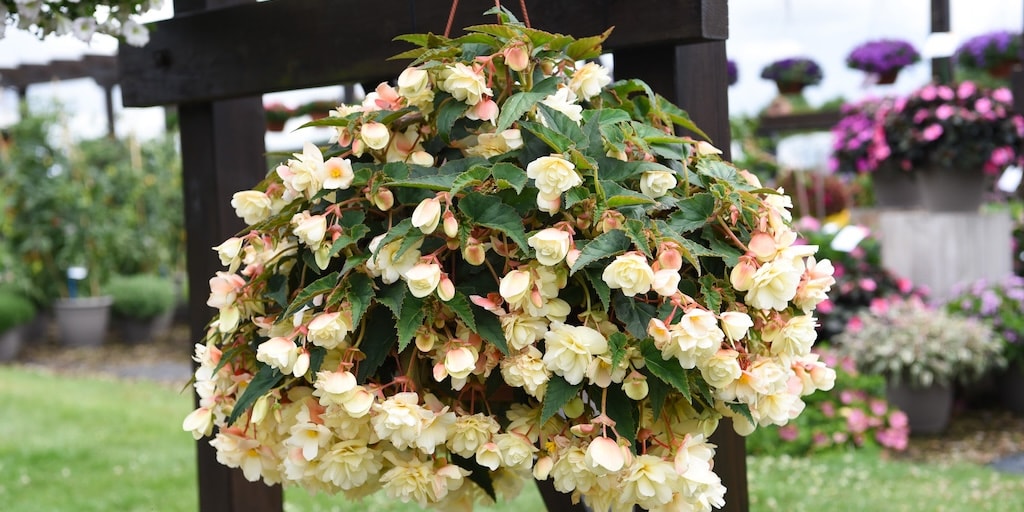
Image: Begonia ‘Belina Vanilla’ from Dobies (© BGP)
To start your begonia tubers, place them hollow-side up in shallow trays of moist, peat-free compost. Keep them somewhere warm and bright, and shoots should emerge within 3–5 weeks. Pot them on once the shoots reach 5–7cm, then harden off gradually before planting outside.
The best place to plant tuberous begonias is in bright but indirect light; morning sun with afternoon shade is ideal. Semperflorens are more sun-tolerant and can go almost anywhere. However, all begonias need well-drained, moisture-retentive soil or compost. They’ll rot quickly in waterlogged conditions.
For containers, use a rich multipurpose compost with added perlite or grit for drainage.
How to care for your begonias
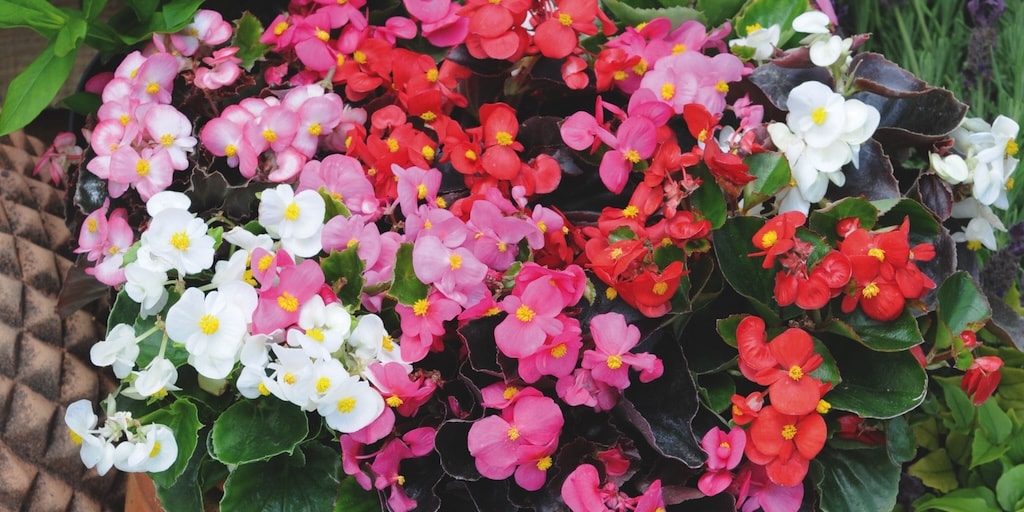
Image: Begonia semperflorens ‘Organdy Mixed’ F1 from Dobies
With a little care and attention, your begonias will flower for months on end. Here’s how to get the best from them:
- Watering: Water your begonias consistently, but never allow the plants to sit in water. In warm weather, container-grown begonia plants may need watering daily. Always water at the base as wet foliage encourages mildew.
- Feeding: Once flowering begins, feed your plants every 10-14 days with a high-potash fertiliser (tomato feed works perfectly). This is the single most effective thing you can do to prolong flowering and keep plants looking their best all summer.
- Deadheading: Remove the spent blooms regularly to encourage continuous flowering. On tuberous begonias, the two smaller single flowers flanking the central bloom will often drop on their own. Don’t worry, this is perfectly normal.
How to overwinter begonia tubers
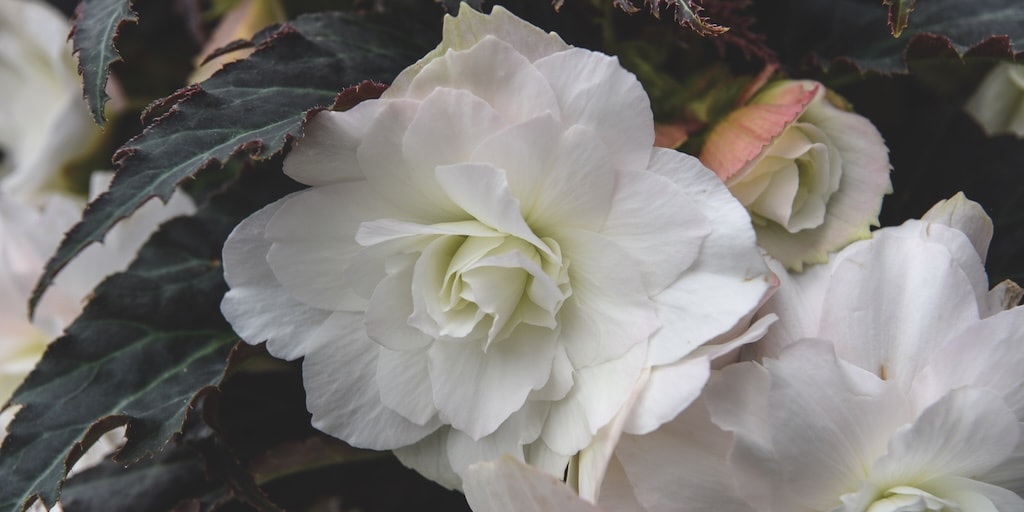
Image: Begonia ‘Nonstop Joy Mocca White’ from Dobies (© T&M)
One of the great advantages of growing begonias from tubers is that you can save them to return year after year. Here’s how:
- In September or October, before the first frost, carefully lift your plants and cut the stems back to 5cm
- Allow the tubers to dry in a frost-free shed or garage for two to three weeks
- Once dry, brush off any remaining compost and store in paper bags or trays of dry vermiculite
- Keep at 7-10°C through winter (an insulated garage or frost-free shed is ideal)
- Check monthly for rot and remove any affected tubers immediately
Well-stored begonia tubers will grow larger and produce more flowers each subsequent year.
Begonias have stunning blooms and lush foliage. Whether you grow them in beds, window boxes, patio containers or hanging baskets, they bring a reliable burst of colour to your outdoor space. Looking for more ideas? See our top ten easy bedding plants for spring and summer.
Lead image: Begonia ‘Nonstop Mixed’ from Dobies