


Few flowers reward such little effort so generously. Scatter poppy seeds onto bare ground in autumn or spring, step back, and by summer you’ll have a garden full of movement, colour, and bees. Whether you’re after the papery, tissue-thin blooms of annual poppies, the silky cups of Eschscholzia (California poppy), or the bold architectural seed heads of perennial varieties, there’s a poppy for every type of garden.
Here’s everything you need to know about growing poppy seeds, from choosing the best varieties to getting them to return year after year.
What are the different types of poppies to grow?
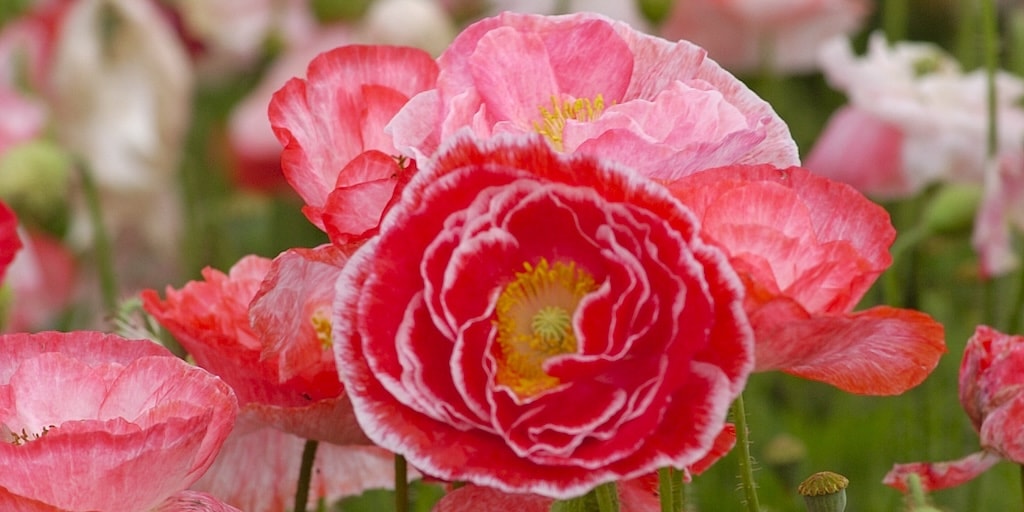
Image: Poppy ‘Falling in Love’ seeds from Dobies
- Annual poppies complete their life cycle in one season but self-seed so freely you’ll rarely need to buy again. The most popular are Papaver rhoeas (field poppy) which includes the ‘Falling in Love’ series.
- Perennial poppies (Papaver orientale, the Oriental poppy) are the statement makers; huge, crepe-paper blooms up to 20cm across in early summer, followed by attractive seed heads. They die back after flowering but return reliably each year, growing into impressive clumps. Best bought as poppy plants or grown from root cuttings.
- Eschscholzia (California poppy) is technically its own genus but is often grouped together with true poppies. Eschscholzia californica is a hardy annual that produces vibrant, satiny flowers in orange, yellow, red, pink, and cream from June to October. It thrives in exactly the dry, thin ground that many plants struggle, and is well suited to the British climate.
When to sow poppy seeds
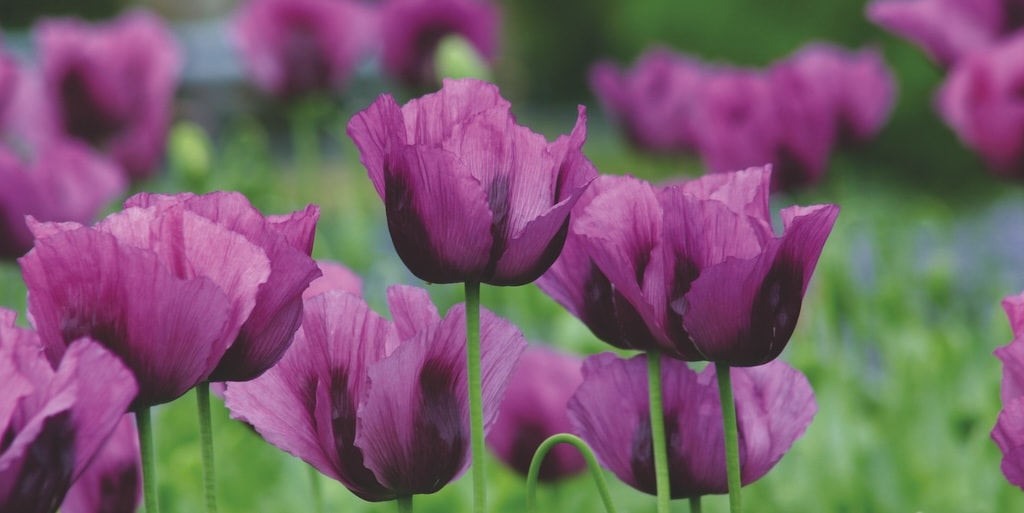
Image: Poppy ‘Hungarian Blue’ seeds from Dobies
Poppies prefer cool conditions for germination, which makes them perfectly suited to the British climate. There are two ideal sowing windows:
- Autumn sowing (September – October): Direct sow poppy seeds where you want them to flower. They’ll germinate, overwinter as small rosettes, and flower earlier and more abundantly the following summer. This is the method most experienced gardeners swear by.
- Spring sowing (February – April): Sow as soon as the soil can be worked. Don’t wait for warm weather as poppy seeds actually germinate better in cool soil (7–13°C). A March sowing in most parts of the UK will produce flowers by June.
Eschscholzia seeds follow the same pattern as true poppies: direct sow in autumn or early spring. They resent root disturbance, so sowing in situ is always preferable to starting in pots.
How to sow poppy seeds
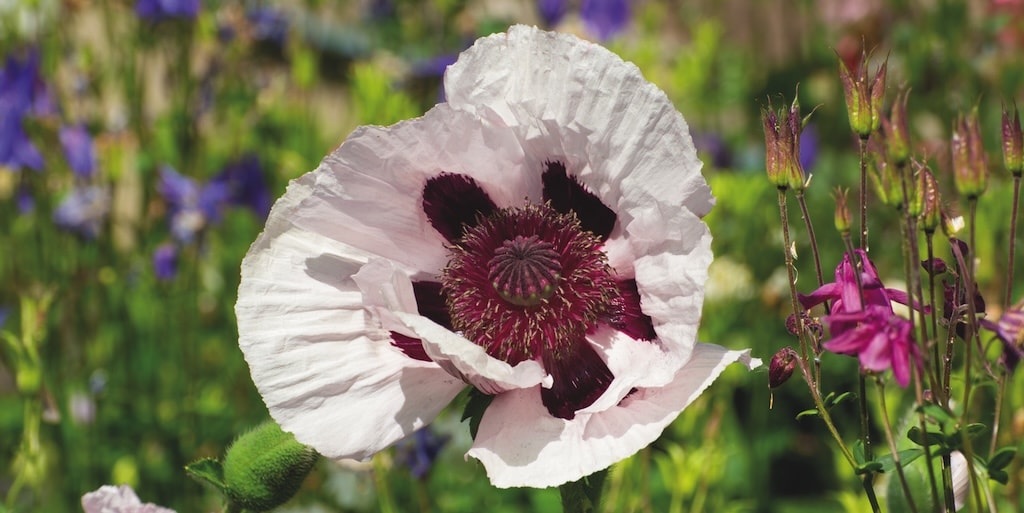
Image: Poppy ‘Royal Wedding’ seeds from Dobies
Poppy seeds are tiny. Mix them with a little dry sand to help spread them more evenly if you’re broadcasting over a large area. You don’t need a fine tilth; just rake the surface lightly and scatter.
- Choose an open, sunny spot as poppies need full sun to perform well. They’ll tolerate partial shade but will produce fewer flowers.
- Avoid improving the soil. Rich, fertilised ground encourages leafy growth at the expense of flowers. If your soil is heavy clay, improve drainage with horticultural grit rather than adding compost.
- Scatter the seeds thinly and rake in gently. You’re aiming to just cover the seed with a few millimetres of soil.
- Water in carefully with a fine rose, then leave them to it. Poppies don’t need cosseting. In fact, overwatering at germination is one of the few ways to fail with them.
- Expect germination in 10–20 days at soil temperatures above 10°C.
- Thin the seedlings when they’re large enough to handle, leaving around 15–20cm between each plant for annuals, and 45–60cm for Orientals.
How to care for poppies
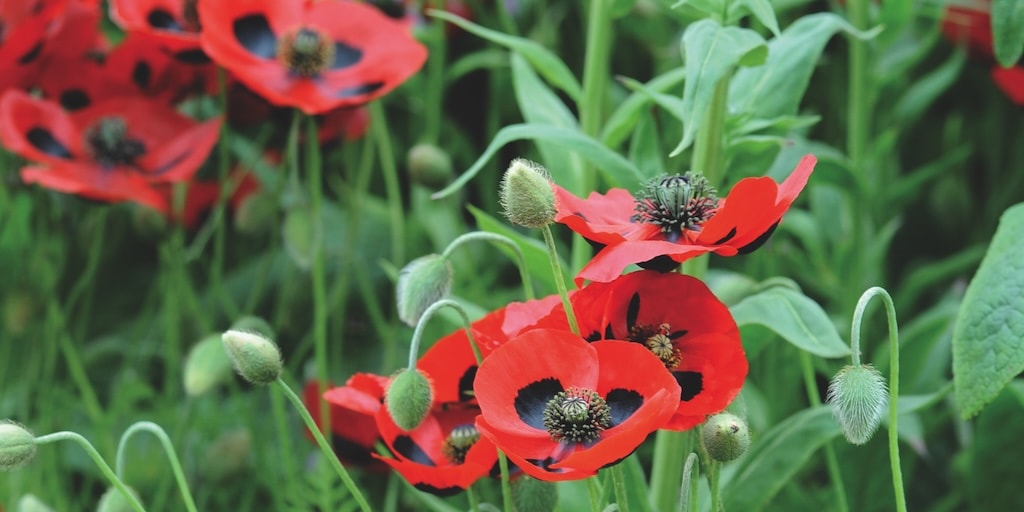
Image: Poppy ‘Ladybird’ seeds from Dobies
Once established, poppies need very little. A dry spring is rarely a problem as they’re drought-tolerant once the roots are down. What they won’t forgive is waterlogged ground over winter, which rots the crown. If your garden is prone to sitting wet, raised beds or gritty, free-draining borders will serve you much better.
Eschscholzia will flower continuously from late spring right through to the first frosts if you deadhead regularly. Leave a few seed heads to ripen at the end of the season and they’ll self-seed for the following year, at which point they’ll naturalise without any further effort on your part.
Oriental poppies put on a spectacular show in May and June, then go dormant. The foliage dies back entirely. Plant later-growing perennials nearby (geraniums, salvias, grasses) to fill the gap they leave.
Few garden plants offer so much for so little effort. A single packet of poppy seeds can fill a border with months of colour and, once established, they’ll self-seed freely for years to come. And for gardeners wanting something more permanent, Oriental poppy plants deliver genuine drama year after year. Browse our full range of cottage garden plants if you don’t have time to sow seeds.
Lead image: Poppy ‘Rhoas Field Poppy’ organic seeds from Dobies