
Even a small garden has room for a tree, and the right one can transform it entirely. Trees bring height and permanence that nothing else quite matches, anchoring your planting scheme while offering colour, structure, and important habitat for wildlife. This guide will help you find the best tree for your outside space and includes specific variety advice from award-winning garden journalist, Mandy Bradshaw.
Browse Dobies’ full range of trees here.
How to choose the right sized tree for your space
When it comes to choosing a tree, always check its eventual height and spread at maturity. Most ornamental trees take ten to twenty years to reach full size, so it pays to plan for the tree you’ll have, not the one you’re planting.
As a rule of thumb, trees under 6m suit most average UK gardens, while anything taller needs a more spacious plot. Check the eventual spread too, not just the height: a wide-crowned tree can shade out borders and lawns long before it reaches full height.
Keep new trees at least 3m away from the house to protect foundations and drains, and mind overhead cables and boundary fences when planting near the garden’s edge. If you’re after a fruiting tree, the rootstock determines its final size, not the variety, so check this carefully before ordering.
What else should you consider when choosing a new tree?
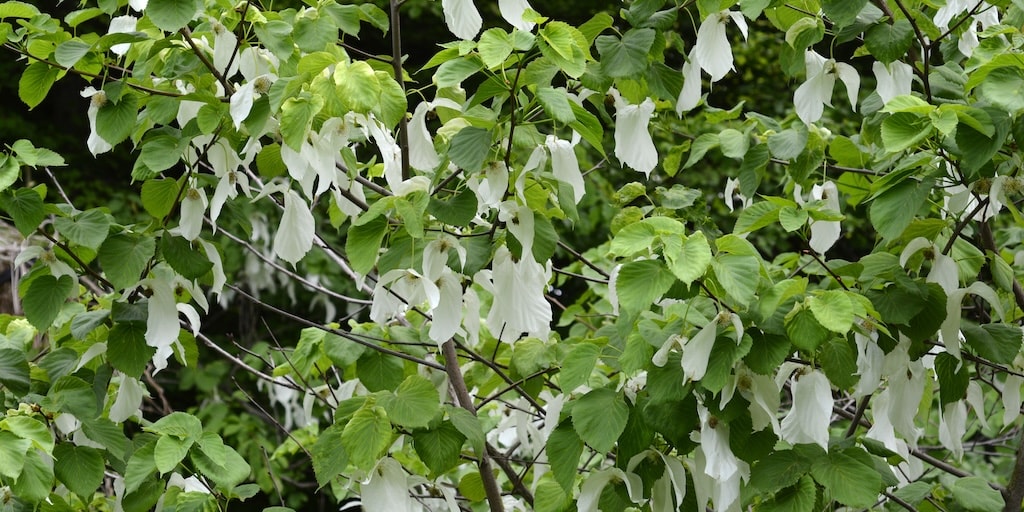
Image: Davidia involucrata var. Vilmoriniana from Dobies
Beyond size, think about what you actually want the tree to do. Are you after a display of spring flowers, fiery autumn colour, year-round screening, or a wildlife-friendly tree that feeds birds and pollinators through the seasons? This will help to steer you towards deciduous or evergreen varieties, flowering trees, hedging trees, or perhaps something with nuts, fruits or berries.
Soil and site matter just as much: most ornamental trees are adaptable, but heavy clay, chalky, or waterlogged ground will suit some species far better than others. Once you’ve chosen a tree, check its preferred conditions before you order.
Aspect is another important consideration. A north-facing spot with little sun will rule out some flowering varieties, while an exposed, windy garden calls for a hardier, more resilient choice. How will the tree sit within your existing planting? A strong specimen tree can act as a focal point on its own, while a more understated variety works better as part of a wider scheme.
Finally, think about time and budget. You can buy and plant bare root trees during their dormant period which is November to March. If you don’t mind waiting a bit longer for them to mature, this is a really cost-effective way to fill your space. But if you’re looking for instant impact, consider buying a mature, more expensive, pot-grown variety that can be planted all-year round.
Step-by-step guide to planting trees
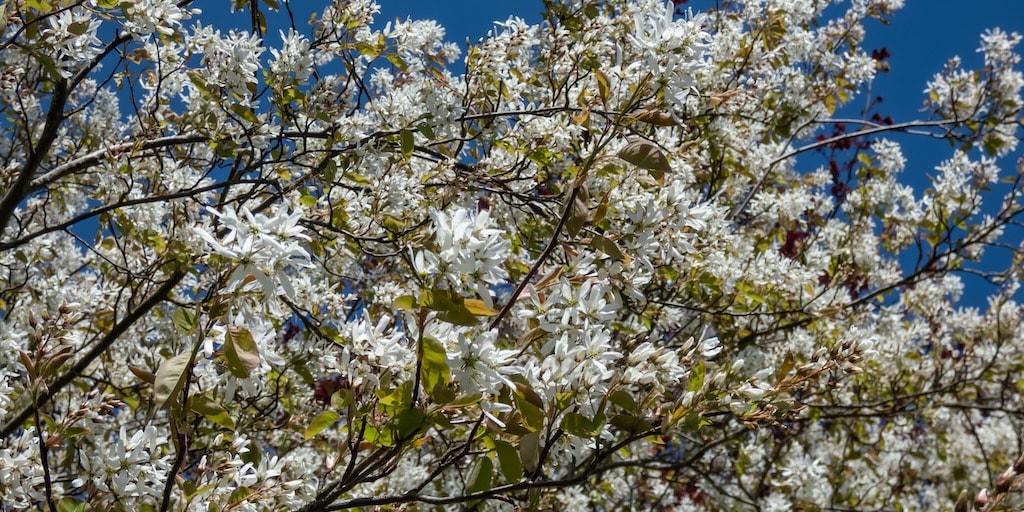
Image: Amelanchier ‘Ballerina’ (Mature Tree) from Dobies
Get the planting right and everything else follows. Our expert team of horticulturists prefer to dig a square hole rather than a round one. This encourages the roots to push out into the surrounding soil instead of circling round and round as they would in a pot-shaped hole. Beyond that, the process is simple:
- Check the depth first: The point where the trunk flares out to meet the roots (the nursery mark) should sit level with the surrounding soil. Planting too deep is one of the most common reasons for a tree to struggle.
- Stake low, not high: A short stake angled into the prevailing wind, driven in before you plant, allows the tree trunk to flex and strengthen naturally while keeping the roots stable.
- Backfill with the soil you dug out: Break up any large clumps and firm gently as you go, easing out air pockets without compacting the ground.
- Water in thoroughly straight after planting, even if the soil looks damp. This settles the soil properly around the roots.
- Keep watering through the first two summers: One full bucket a week during dry spells is the standard most UK trees need to establish; a young tree left to fend for itself in its first year rarely thrives.
- Mulch around the base, keeping clear of the trunk, to lock in moisture and keep weeds from competing for water and nutrients.
How to choose the best tree for different sized gardens?
We asked award-winning garden journalist Mandy Bradshaw to suggest the best trees for different sized gardens. Here are her expert recommendations…
Best ornamental trees for patios
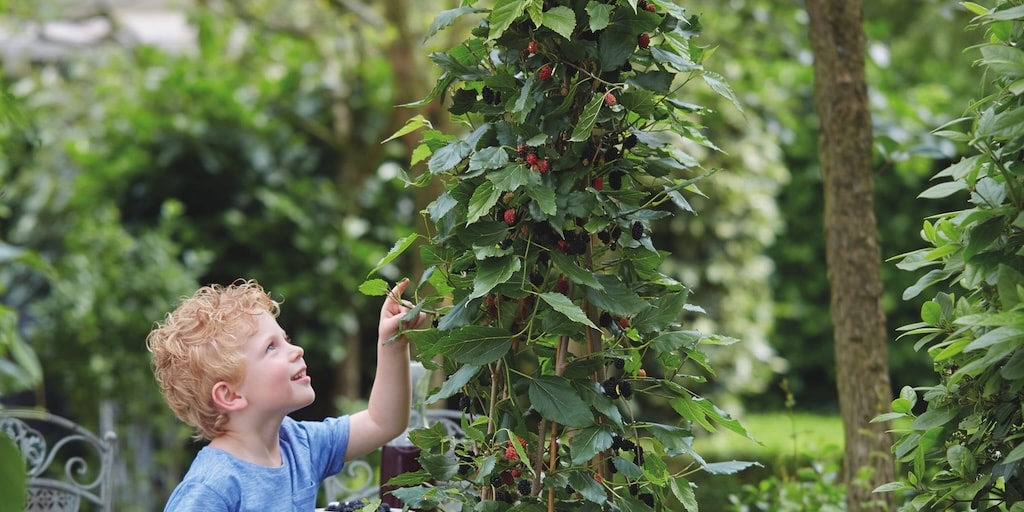
Image: Mulberry ‘Charlotte Russe’ from Dobies (© Plantipp/Visions BV, Netherlands)
- Mulberry ‘Charlotte Russe’ – this miniature variety reaches 2m in height and not only gives you pretty pink flowers in spring, it will also produce lots of juicy fruit.
- Acer palmatum ‘Taylor’ – a compact and pretty variety with green and cream foliage, which has a salmon pink tinge in spring. It then turns lime green in autumn. It reaches 2m in height.
- Holly ‘Blue Maid’ – these elegant standard trees look fabulous flanking a door or marking the start of a path. The evergreen foliage gives year-round structure while, in spring, it has tiny white flowers followed by red winter berries.
Best ornamental trees for small gardens
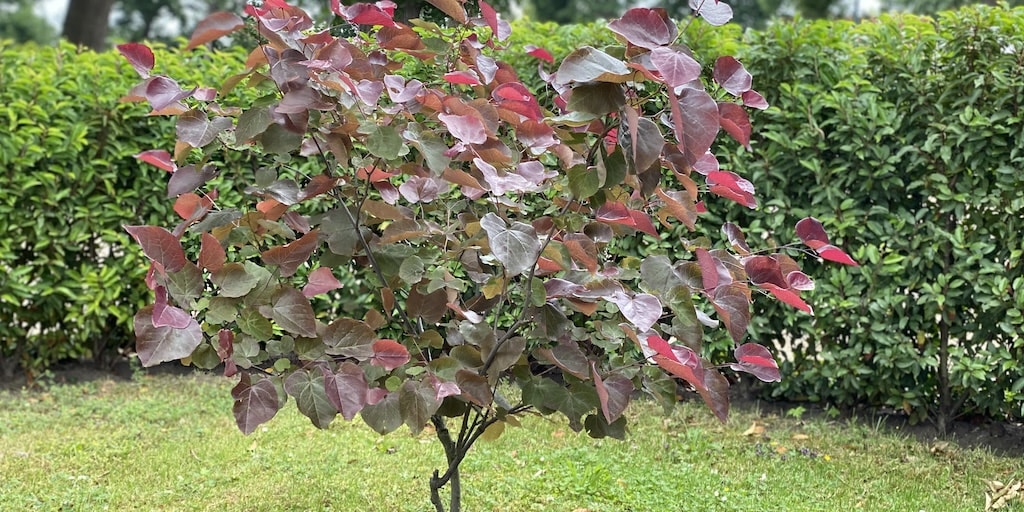
- Cercis ‘Eternal Flame’ – was the winner of the RHS Chelsea Flower Show Plant of the Year 2021. Soft pink blooms appear on the bare stems before heart-shaped foliage that goes through deep red, burnt orange and then lemon yellow.
- Eucalyptus gunnii ‘France Bleu’ – a smaller form of eucalyptus but still with the stunning silver-blue evergreen foliage and aromatic scent. Perfect as a contrast to other plants or for winter interest. Height up to 2m.
- Amelanchier ‘Ballerina’ – this small tree provides several months of interest. In spring, white flowers glow against bronze foliage. The leaves then turn shades of red and purple in autumn. It reaches about 4m in height.
Best ornamental trees for larger gardens
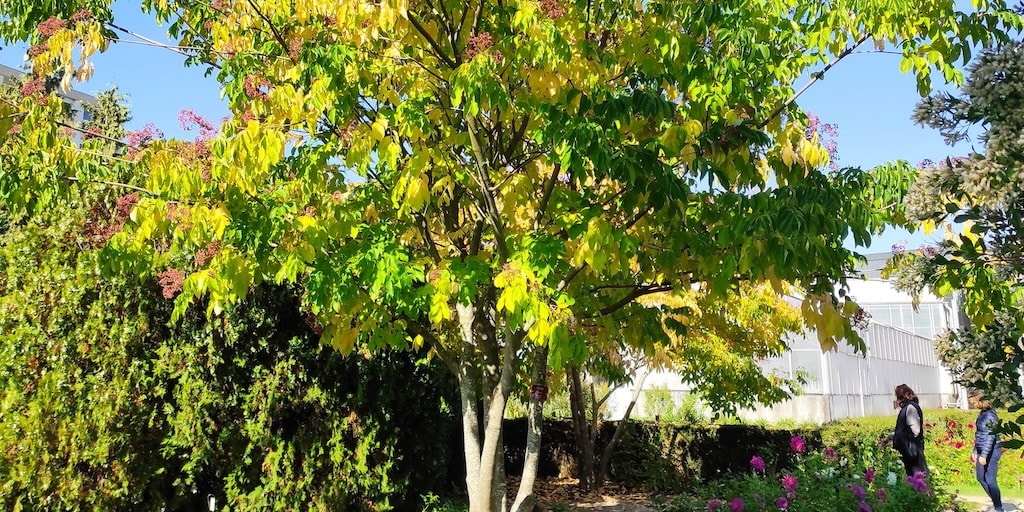
Image: Tetradium danielii from Dobies
- Liquicambar styracifua – is grown for its fabulous autumn colour and interesting spiky fruits. This sweet gum has a conical shape that’s ideal as a specimen tree and will reach 25m.
- Davidia involucrata var. vilmoriniana – grow this for magical white bracts in spring that make the tree look as though it’s festooned with handkerchiefs. It’s a dramatic specimen tree that can reach 12m.
- Tetradium danielii – known as the bee-bee tree, has star-shaped white summer flowers, followed by clusters of red fruit in autumn. The glossy pinnate leaves turn vibrant yellow autumn. It can reach 12m in height.
How to choose the best tree for each season of interest?
Trees are a wonderful way to create real ‘wow factor’ at different times of year. Here, garden journalist Mandy Bradshaw has recommended some of the most striking trees for each season…
Best trees for spring
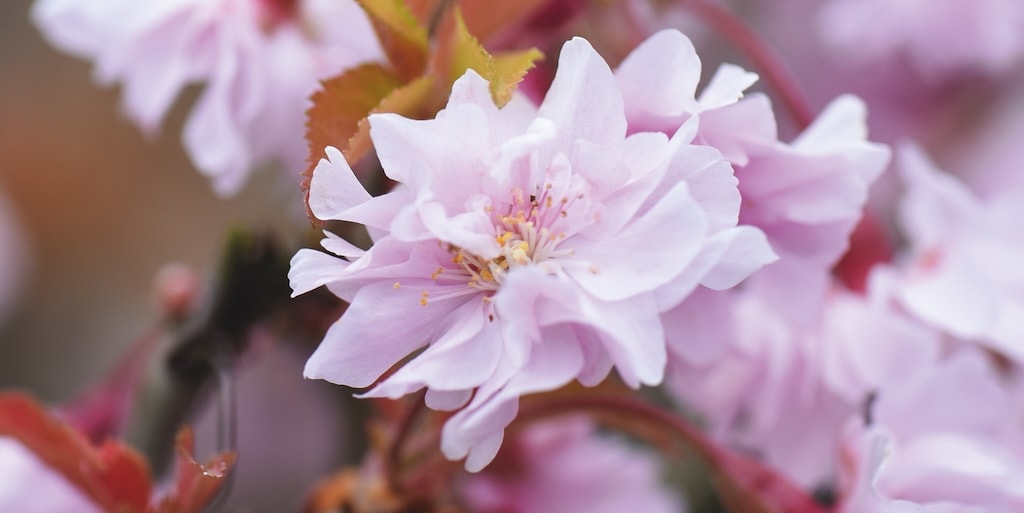
Image: Prunus incisa ‘Oshidori’ from Dobies (© T&M)
- Cornus ‘Starlight’ – this tree has beautiful, pink-tinged white bracts that give a stunning spring display. Red, raspberry-like autumn fruits along with red tinged foliage give added interest later in the year.
- Acer palmatum ‘Cascade Emerald’ – this tree has finely cut leaves that are coppery-pink in spring making a lovely contrast to the orange-red stems. It also has a beautiful autumn display of orange and red foliage.
- Prunus incisa ‘Oshidori’ – this pretty cherry is loved for its baby pink, double blossom that covers the bare branches in early spring.
Best trees for summer
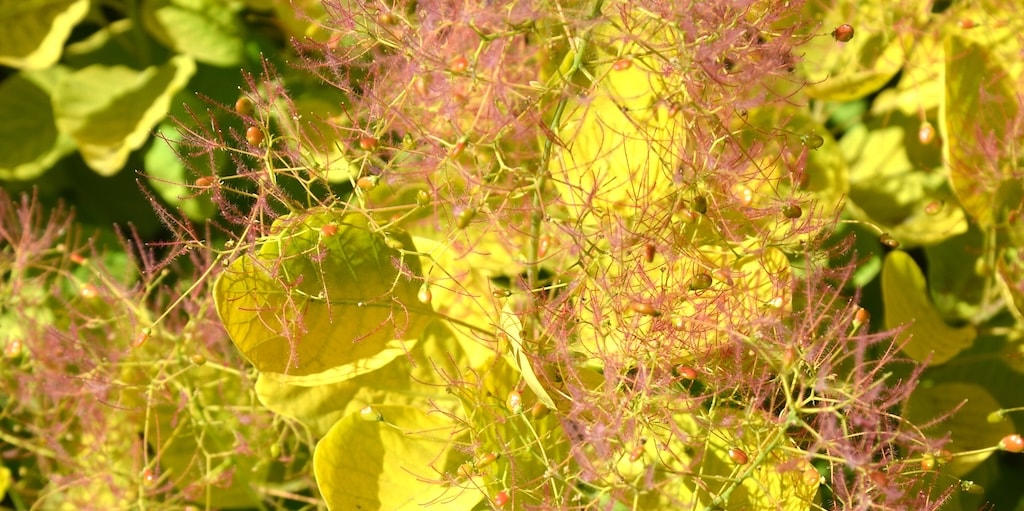
Image: Cotinus coggygria ‘Golden Spirit’ from Dobies
- Cotinus coggygria ‘Golden Spirit’ – known as the golden smoke bush, it has vibrant yellow leaves that get even brighter with exposure to sunlight through the summer. Airy spring flowers and a fiery autumn display make this tree earn its place for far longer than a single season.
- Liriodendron tulipifera – the tulip tree is prized for its green and cream midsummer flowers that resemble tulips. It can reach 20m tall, and is best grown as a specimen tree.
- Koelreuteria paniculata – this tree is also known as the Golden Rain Tree thanks to its bright yellow summer flowers. In addition, it has new spring foliage that’s a lovely blush pink and great autumn colour along with ornamental seed pods.
Best trees for autumn
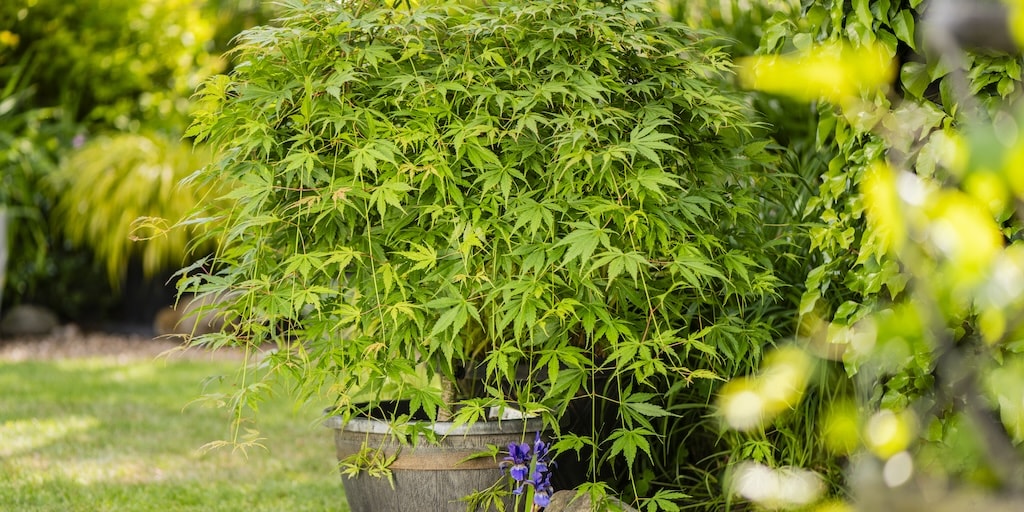
Image: Acer palmatum ‘Cascade Emerald’ from Dobies (© BGP)
- Cercis canadensis ‘Forest Pansy’ – the attractive, heart-shaped leaves of this tree turn fiery red and gold in autumn. It has a multi-branching shape and pink flowers in spring on bare branches.
- Acer palmatum ‘Cascade Emerald’ – prized for its orange and red autumn foliage, this tree is also lovely earlier in the year with finely cut leaves that start fresh green and then turn rich pink.
- Carya illinoinensis – a member of the hickory family, this Pecan tree is loved for its stunning yellow autumn colour. In a warm summer, there’s also a possibility of harvesting pecan nuts.
Best trees for winter
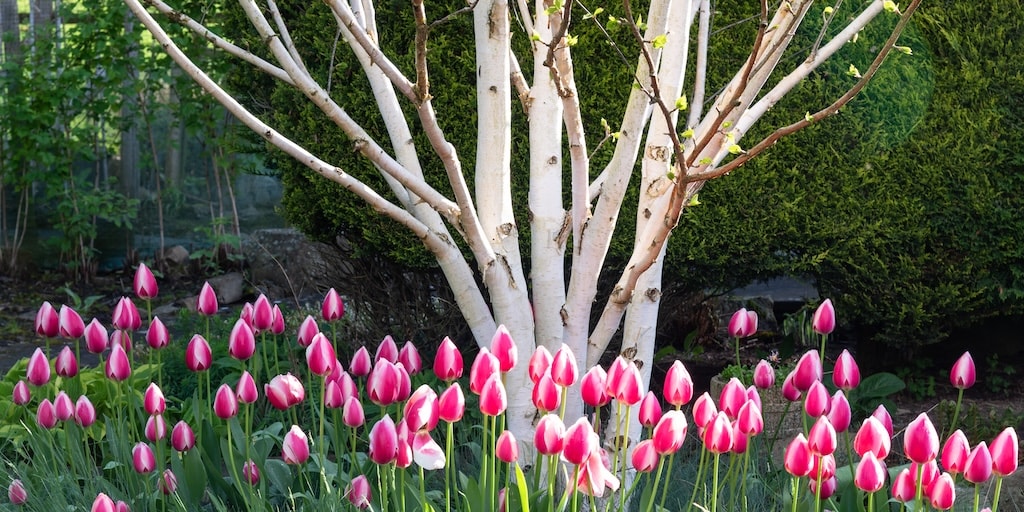
Image: Betula utilis ‘Jacquemontii’ from Dobies
- Hamamelis x intermedia ‘Orange Beauty’ – witch hazels are winter stars with scented flowers on bare branches. This variety has orange blooms and beautiful autumn colour too.
- Ilex aquifolium ’J.C. van Tol’ – the shiny green foliage and pyramid shape of this nearly thornless holly make it a standout winter specimen. Tiny white flowers in summer are followed by lots of red berries.
- Betula utilis ‘Jacquemontii’ – the West Himalayan birch has a graceful shape and glowing, golden autumn colour. In winter though it’s the peeling, white bark that stands out.
The right ornamental tree earns its place for decades, so choosing carefully pays off for years to come. If you’re after something ornamental and edible, read our guide to choosing fruit trees for advice. Need more inspiration? Browse our collection of award-winning trees to find something unique and special.