

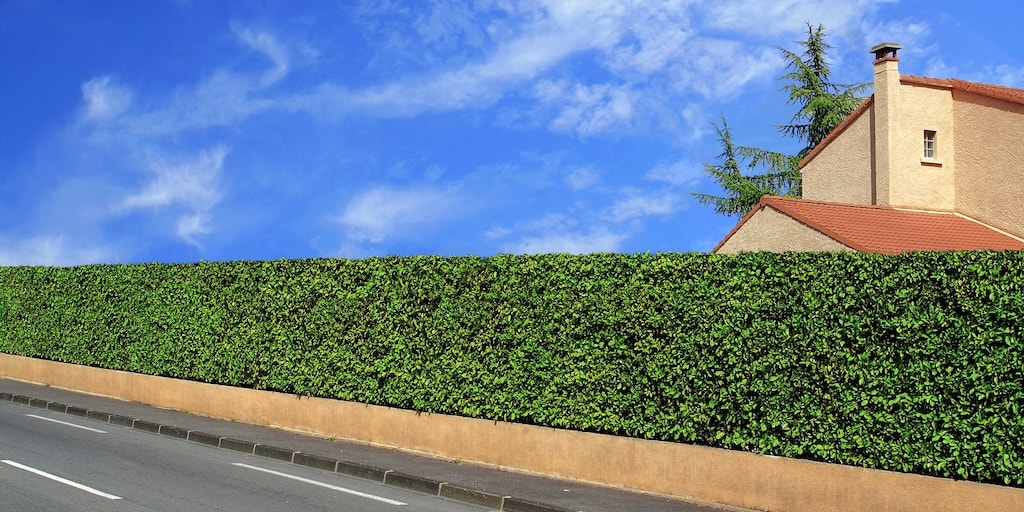
A good hedge does more work than almost anything else in the garden. It marks your boundary, blocks wind, muffles noise, and gives birds somewhere to nest, all while looking better with every passing year. But choosing the right hedge is an important decision. And getting it into the ground correctly requires expert advice.
This guide walks you through everything from choosing the best hedge plants to spacing, planting and pruning. Here’s how to set your hedge up for the long haul.
Hedge Plants: Quick Facts
- Bare root hedges are delivered between November and March, and should be planted as soon as possible.
- Pot grown hedge plants are available all year round, but do best when planted from autumn to late winter.
- Prepare the ground in advance, and mark the hedgeline with string and stakes.
- Plant a staggered double row for extra thickness.
- Planting too deep is a common cause of failure.
- Water new hedges well for the first two years, until they get established.
How to choose the best hedge plants for your needs
Choosing a hedge starts with working out what you actually need it to do. A boundary hedge for privacy calls for something dense and evergreen like yew, laurel or privet, while a wildlife hedge that gives birds and insects food and shelter is likely to include things like hawthorn, hazel and blackthorn.
Soil matters more than most people expect: heavy clay suits hornbeam and hawthorn far better than it does box or lavender, so it’s worth knowing your soil type before settling on a species.
Growth rate is another consideration. Fast growers like leylandii fill a gap quickly but demand more frequent trimming to keep them in check, whereas slower species such as yew need real patience but hold their shape with far less maintenance. Don’t forget to think about ultimate height and width, and how much space you can give the hedge to mature, since planting too close to a boundary or path will require more work to correct later.
Bare root hedge plants vs pot grown
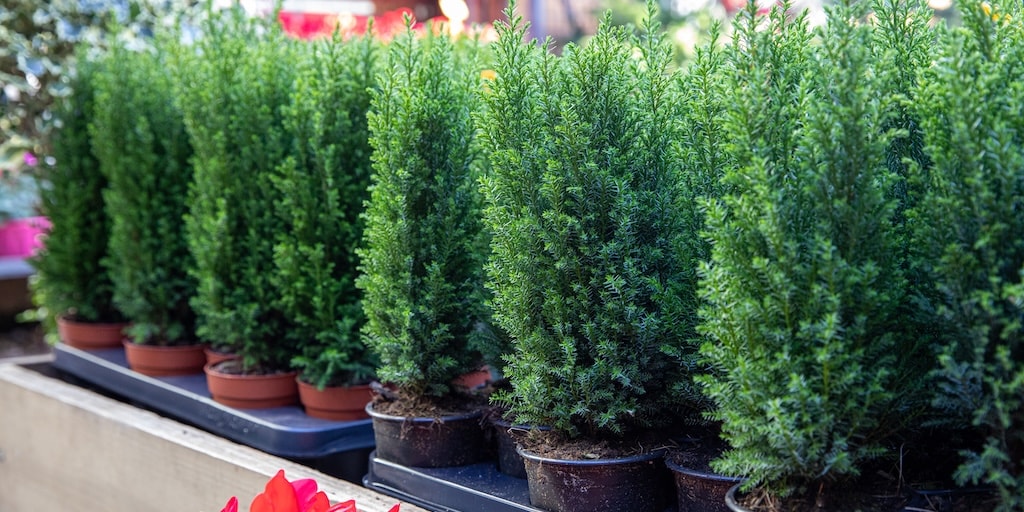
Image: Chamaecyparis lawsoniana ‘Ellwoodii’ from Dobies
Hedging plants can be bought as bare root, root ball or pot grown. Bare root means the plant is lifted while it’s dormant and delivered without a pot. Root ball plants are also lifted while dormant, but with some of the surrounding soil, and arrive wrapped in cloth or hessian. Both of these are cost-effective to buy, and the plants are quicker to establish. However, they can be bought and planted only while the plants are dormant, between October and March.
Container grown plants are more expensive, but convenient in that they can be bought and planted year-round.
How to work out how many hedge plants to buy
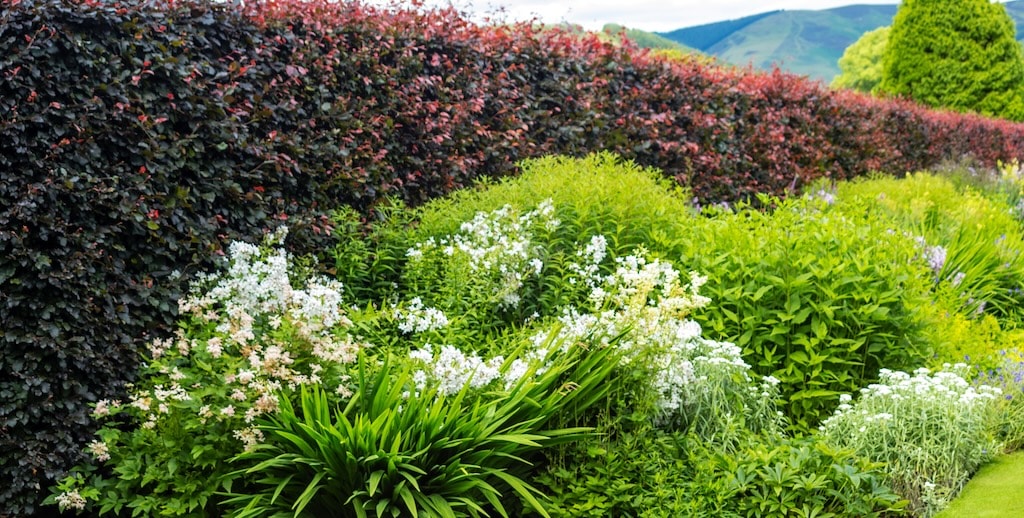
Image: Copper Beech (Hedging) from Dobies
Working out how many plants you need comes down to the length of your hedge and the spacing between plants. The spacing varies by species and how quickly you want your hedge to thicken up.
As a good rule of thumb, most hedging plants should be set 30-45cm apart within the row. If you plant slightly closer you’ll get a fast, dense screen but, if you’re patient, you can space them slightly wider which will take longer to thicken up but saves money on plants.
For a single row, simply divide the hedge length by your chosen spacing to get the number of plants required. A double row gives a thicker, more solid hedge from the outset, which suits boundary or windbreak planting, and is set out in a staggered zigzag pattern with rows around 30-40cm apart, offsetting the plants so each one fills the gap in the row beside it. As a rough guide, a 10-metre hedge planted at 40cm spacing in a single row needs 25 plants, while the same length in a staggered double row needs closer to 50.
Use the ‘Planting Distance Calculator’ on the product pages of Dobies website to get an accurate number. Always measure your run before ordering, and buy a few extra plants at the beginning to fill any gaps that appear partway through.
How to prepare the ground before planting a hedge
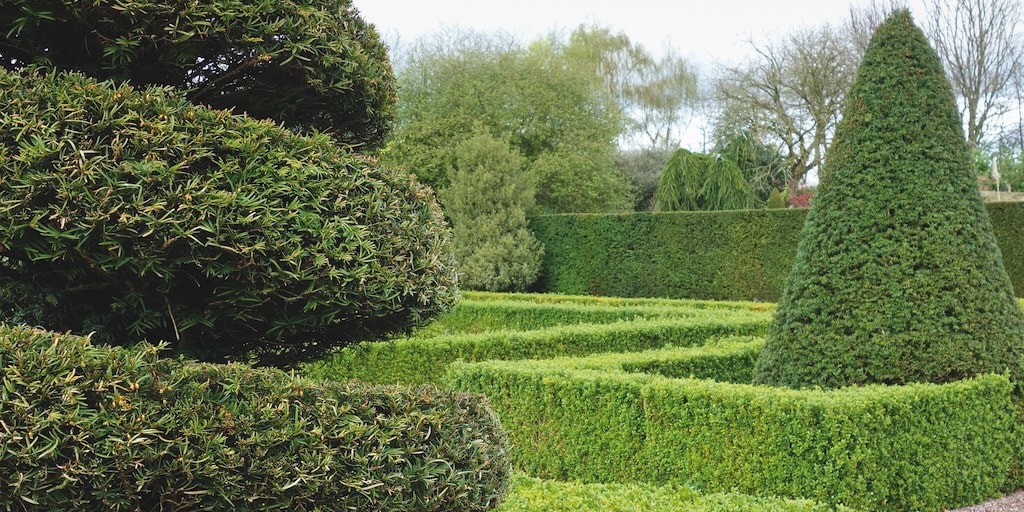
Image: English Yew (Hedging) from Dobies
Before you plant your hedge, prepare the ground and mark out your line:
- Clear a strip 45-90cm wide, depending on your hedge’s final width, removing weeds and digging over to a spade’s depth.
- Work in plenty of organic matter if your soil is poor.
- Mark the hedgeline with string and stakes, allowing around 90cm from your boundary to leave room for growth.
- Cut a length of bamboo as a measuring guide, so spacing stays consistent once planting begins.
How to plant your hedge
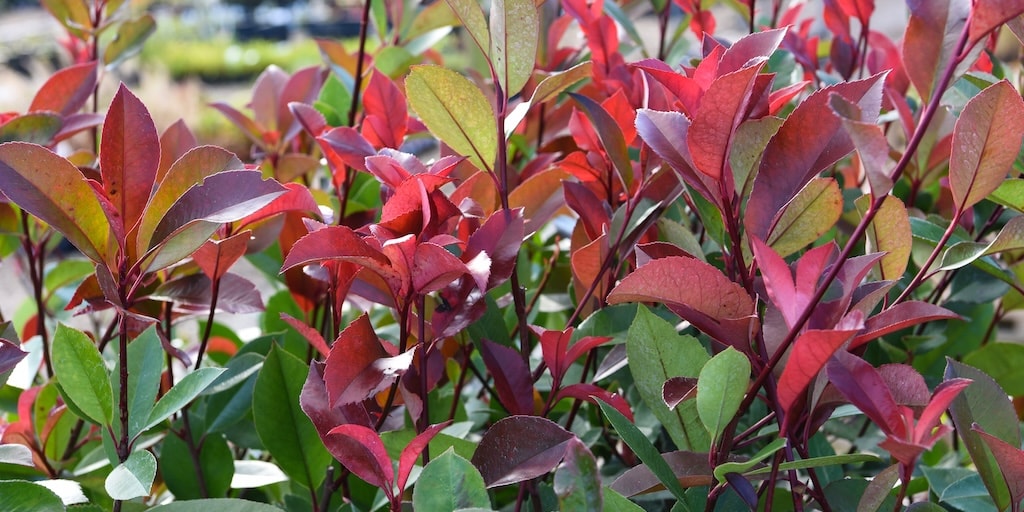
Image: Photinia x fraseri ‘Red Robin’ (Hedging) from Dobies (© T&M)
The planting process is broadly the same, whether you’ve ordered bare root plants, root balls or container-grown hedging:
- If you’ve ordered bare root plants, get them into the ground as soon as possible after arrival. They dry out quickly, and need to stay moist and cool.
- If you can’t plant straight away, cover bare roots with moist compost and store somewhere cool and dark for up to two weeks.
- Soak the roots in a bucket of water for 30 minutes before planting.
- Dig a hole wide enough to take your plants comfortably, slightly bigger for pot-grown varieties.
- Look for the dark soil mark near the base of the stem. This shows the depth the plant was growing at in the field or pot, and it needs to sit at the same level in your garden.
- Put the plant in the hole and backfill firmly with your heel, holding the stem upright.
- Water thoroughly, and continue to water for two years until established.
- Take extra care on clay soil, where planting too deep is the most common cause of failure.
- Finish with a 7.5cm layer of mulch around the base to suppress weeds and lock in moisture while the roots establish.
Best hedge plants for different purposes
We asked an award-winning garden journalist, Mandy Bradshaw, for her top tips on the best hedges for different purposes. Here are the varieties she chose…
Best hedge plants for privacy
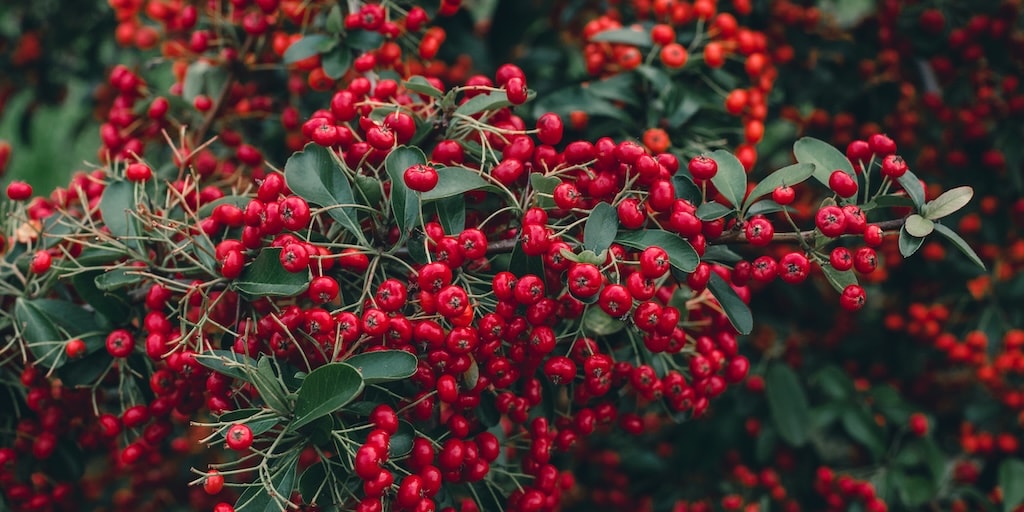
Image: Pyracantha coccinea ‘Red Column’ from Dobies
A healthy, densely planted hedge is a great way to create a privacy screen around your home and garden. More than just a visual barrier, a hedge also helps to block noise, pollution and wind. And thorny plants add a layer of security as well. Here are Mandy’s suggestions if you’re looking for privacy:
- Ligustrum vulgare ‘Atrovirens’ – privet makes a great evergreen hedge for privacy with a dense habit and small white flowers in summer.
- Griselinia littoralis – evergreen and easy to grow, griselinia will quickly form a dense hedge.
- Pyracantha ‘Red Column’– the upright growing habit of this variety makes it ideal for creating a dense and thorny hedge. The red berries in winter are an added bonus.
Best fast-growing hedge plants
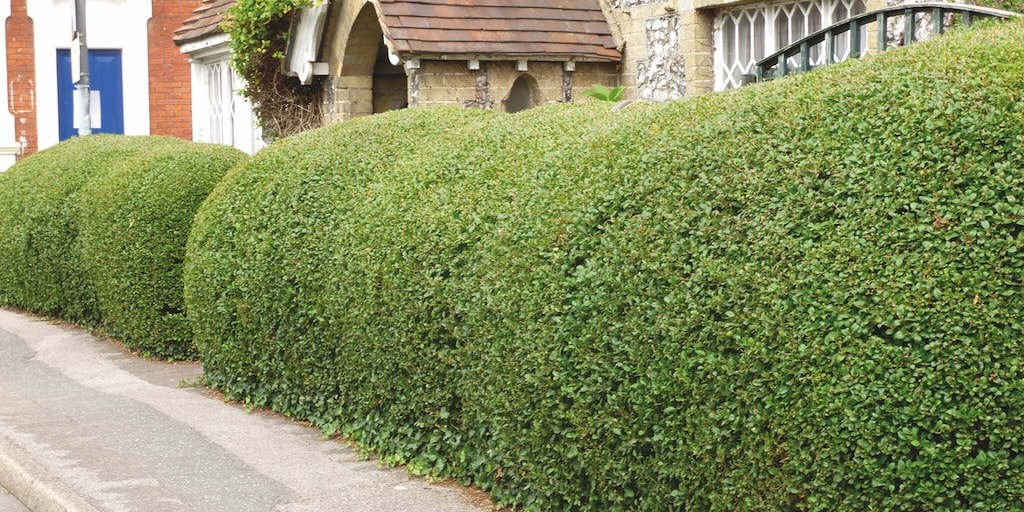
Image: Ligustrum ovalifolium (Hedging) from Dobies
Fast-growing hedges are highly sought-after, especially evergreen varieties that quickly form a useful screen. Here are some of Mandy’s top picks for a quick-growing hedge:
- Griselinia littoralis – a fast-growing evergreen with elegant foliage that’s easy to grow and hardy. It will make a height of 8m.
- Thuya plicata ‘Atrovirens’ – a fast-growing evergreen with scented foliage and copper bark. It responds well to pruning and will regrow from old wood.
- Ligustrum ovalifolium – privet is loved for its speed of growth, reliability and drought resistance.
Best evergreen hedge plants
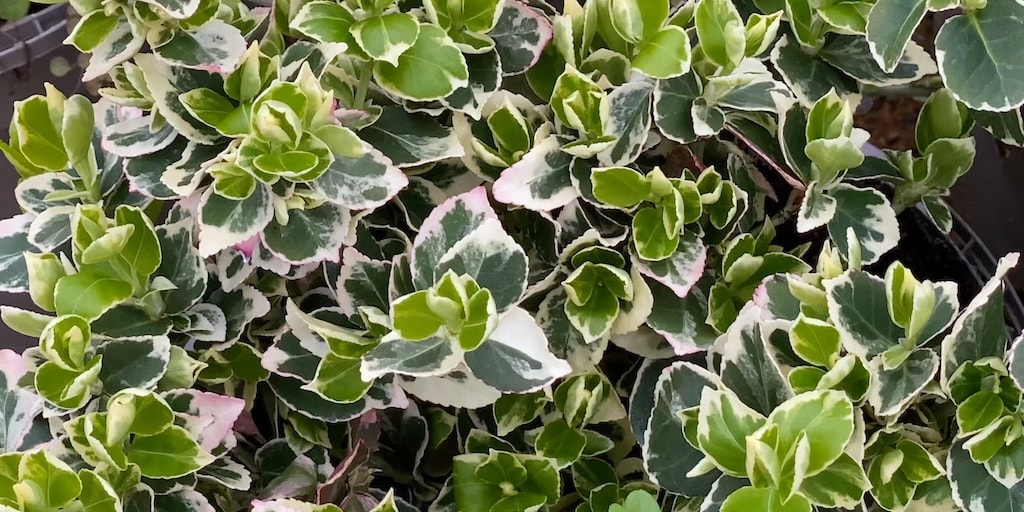
Image: Euonymus fortunei ‘Emerald Gaiety’ from Dobies
Evergreen hedge plants look good all year round, keeping their foliage through the coldest months. Mandy suggests:
- English yew – a densely growing hedge that makes the perfect backdrop to flowering plants. It can also be clipped into topiary or a shaped hedge.
- Euonymus fortunei ‘Emerald Gaiety’ – attractive two-tone foliage and a compact form make this an easy to care for choice for hedges.
- Lonicera nitida ‘Elegant’ – the tiny green leaves on this shrubby honeysuckle produce a dense hedge. It can be grown as a tall boundary, topiary or low, formal hedge.
Best flowering hedge plants
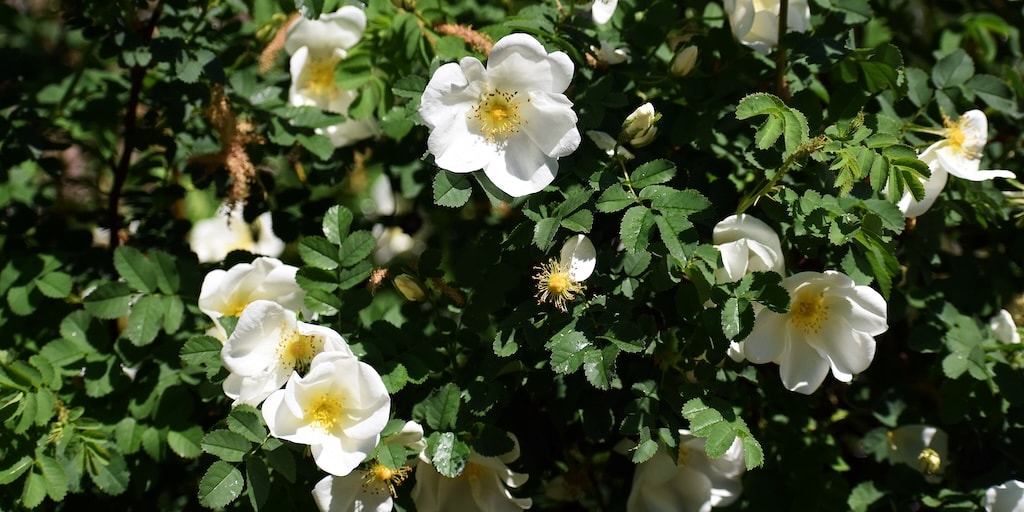
Image: White Ramanas Rose (Hedging) from Dobies
Flowering hedges are loved by humans and pollinators alike. Mandy recommends the following hedge plants for a blossom-laden display:
- Escallonia ‘Apple Blossom’ – clusters of rosy-pink flowers from June to August make this a pretty choice for hedging. Best in full sun, it will grow to around 2.5m high.
- Forsythia x intermedia ‘Spectabilis’ – this easy, hardy shrub will clip to make a neat hedge that is covered in bright yellow flowers from March to May.
- White ramanas rose – this makes a beautiful hedge with scented, white flowers from July to October. The bright green leaves turn yellow in autumn.
Best low-maintenance hedge plants
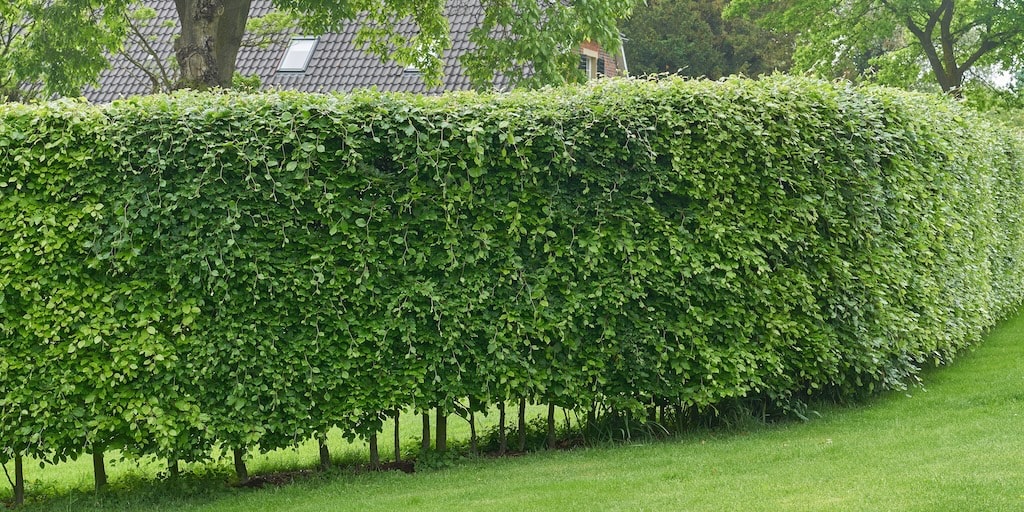
Image: Hornbeam (Hedging) from Dobies
Low-maintenance hedges are easy to grow and require little in the way of pruning. Here are some of the best varieties to try:
- Photinia x fraseri ‘Red Robin’ – an evergreen with fabulous ruby red foliage. It can be left unclipped and will stay compact, but will also tolerate hard pruning.
- Hornbeam – this easy to grow British native can be left unpruned or clipped. The shiny green foliage turns yellow in autumn.
- Aucuba japonica ‘Mr Goldstrike’ – easy to grow, this bullet-proof evergreen shrub is tolerant of even the most difficult sites.
Best wildlife-friendly hedge plants
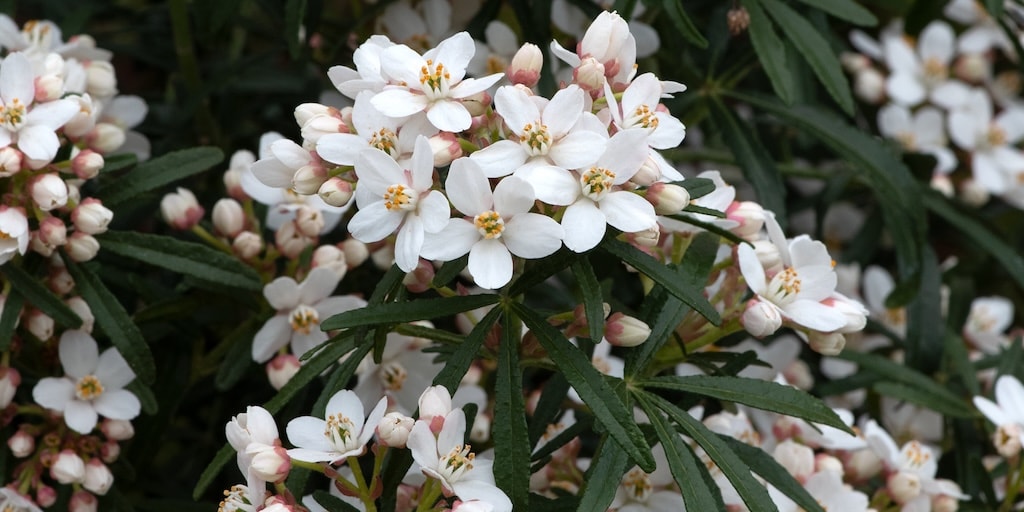
Image: Choisya ternata ‘Scented Gem’ from Dobies
The best wildlife-friendly hedges provide habitat, food and shelter. Mandy’s suggestions include:
- Choisya ternata ‘Scented Gem’ – this shrub produces fragrant white flowers in spring and early summer that are loved by bees and butterflies.
- Hawthorn – blanketed in pretty white flowers in May that attract pollinators, this security hedge follows up with red berries in autumn for the birds.
- Blackthorn – a British native, this is important for a range of wildlife providing habitat, early flowers for pollinators, a breeding site for butterflies and moths, and berries for birds.
Dedicated to providing top quality plants and seeds, Dobies has over 18,000 5-Star reviews. Your plants also come with a money-back quality guarantee, should you require it. If you’re choosing a hedge to help with biodiversity, read our article on how to create a wildlife-friendly garden for more tips.