

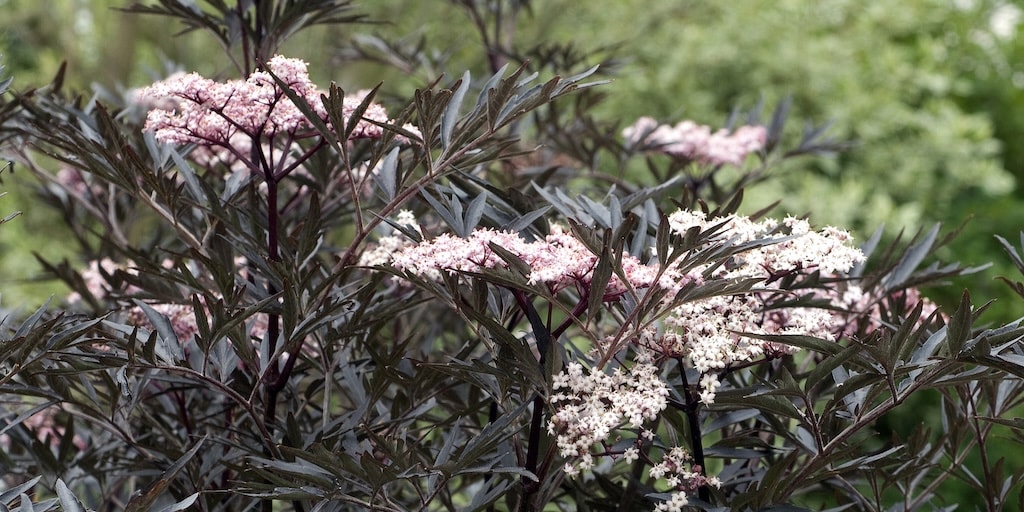
A shrub is any woody plant that branches from ground level rather than growing on a single trunk. The ‘middle layer’ of a well-planned garden, shrubs fill the space between taller trees and low, spreading perennials. They also give a border a framework that holds firm through winter. This guide is designed to help you find the right shrub for your space, and includes specific variety advice from award-winning garden journalist, Mandy Bradshaw.
Browse Dobies’ full range of shrubs for more ideas.
Choosing A Shrub: Quick Tips
Before choosing your shrub, there are a few considerations to take into account.
- Soil and location: Some shrubs prefer acidic soil while others are less fussy. Some require full sun to thrive, while others can cope with a shadier spot.
- Size: Think about the shrub’s eventual size, to make sure it doesn’t outgrow its space.
- Evergreen or deciduous: Think about whether you want all year round foliage, or a deciduous variety that drops its leaves to reveal striking architectural stems.
- Seasonal colour: Do you want to include shrubs with flowers, berries, fruits or variegated foliage? Some shrubs provide a spectacular display of colourful foliage in autumn, while others look their best in spring.
When to plant shrubs
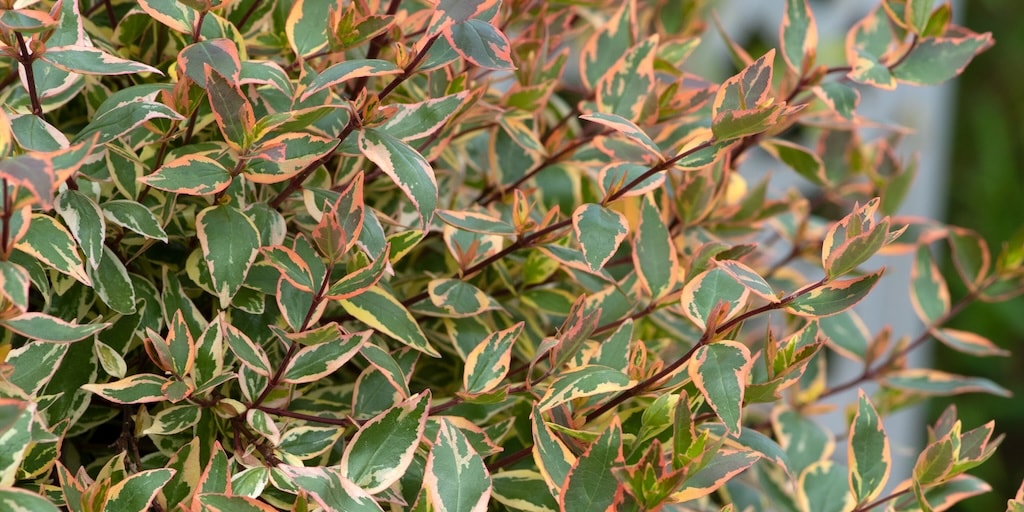
Image: Abelia x grandiflora ‘Tricolour Charm’ from Dobies
The ideal planting window for most shrubs is from autumn to early spring. Just avoid getting started when the ground is waterlogged or frozen solid, as neither gives roots the conditions they need to settle in. Having said that, container-grown shrubs are flexible and can go in at any time of year, but those planted from autumn to spring will require less watering. Shrubs planted in summer need to work much harder to establish their roots in dry soil.
Bare-root shrubs are only available to buy and plant during their dormant season which is November to March, and should go straight into the ground as soon as they arrive. If you can’t plant immediately, temporarily heel them into damp soil to keep the roots moist until you’re ready. See our full range of cost-effective bare root shrubs for inspiration.
Step-by-step guide to planting shrubs
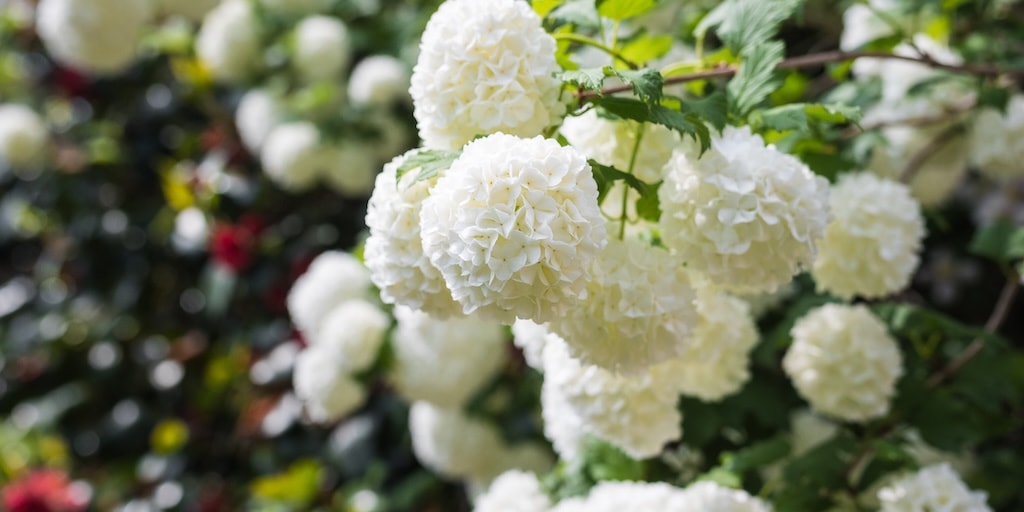
Image: Viburnum opulus ‘Roseum’ from Dobies
Provided you avoid planting in very hot and dry weather or in very wet or frozen soil, your new shrub should establish quickly if you follow a few simple tips:
- Water your shrub well before planting, whether it’s in a pot or bare-root.
- Dig a hole around three times the width of the roots, but no deeper than the roots themselves.
- Loosen the soil at the base and sides of the hole so roots can push outwards easily. Add some mycorrhizal fungi to the bottom of the hole.
- Gently tease out any roots circling round a potbound rootball; leave bare-root systems spread naturally.
- Position the shrub so the uppermost roots sit level with the soil surface when backfilled. Planting too deep is the most common cause of poor establishment and disease.
- Backfill in stages, working soil in around every root to avoid air pockets.
- Firm the soil gently with your hands or heel, then water in thoroughly.
- Add a stake if the shrub is top-heavy or your garden is exposed to wind.
- Mulch around the base, keeping it clear of the stem, to lock in moisture and suppress weeds.
How to care for your shrubs
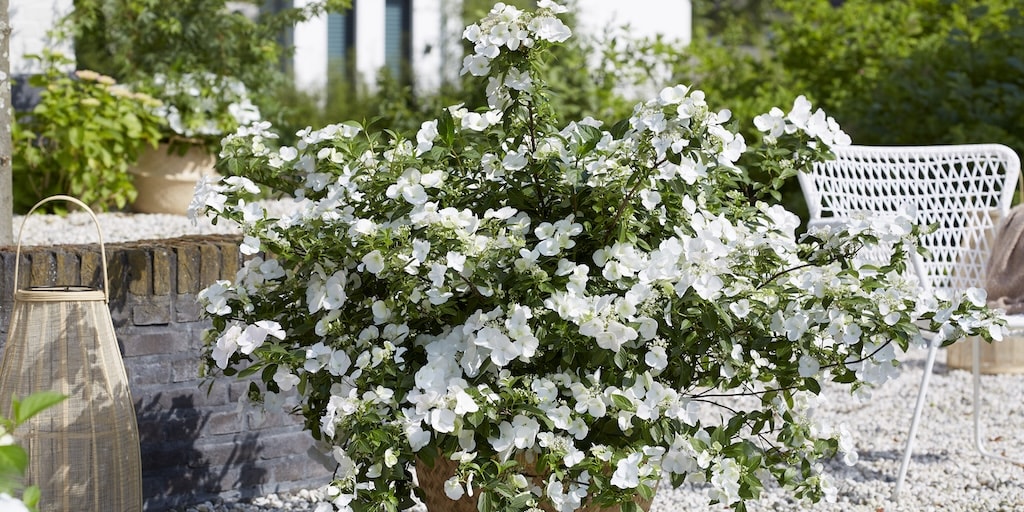
Image: Hydrangea ‘Runaway Bride’ from Dobies
Newly planted shrubs require plenty of water to avoid stress. Even if the soil appears damp on the surface, it can be very dry down around the roots. At the same time, take care not to overwater – it’s possible for the roots to rot, especially in clay soils that don’t drain well.
If you used mycorrhizal fungi at planting time, you shouldn’t apply any extra fertiliser as it will suppress the fungus. If you didn’t, you can feed your plant the following growing season if it needs a boost.
Deciduous shrubs that flower in spring or early summer need annual pruning. Cut them back straight after they have finished flowering to be sure of a good display the following year.
Larger evergreen shrubs, and slow-growing varieties, require very little maintenance, but you can shape them in late spring if required. Smaller varieties, like lavender, should be pruned annually to stop them from getting too ‘woody’.
Best evergreen shrubs
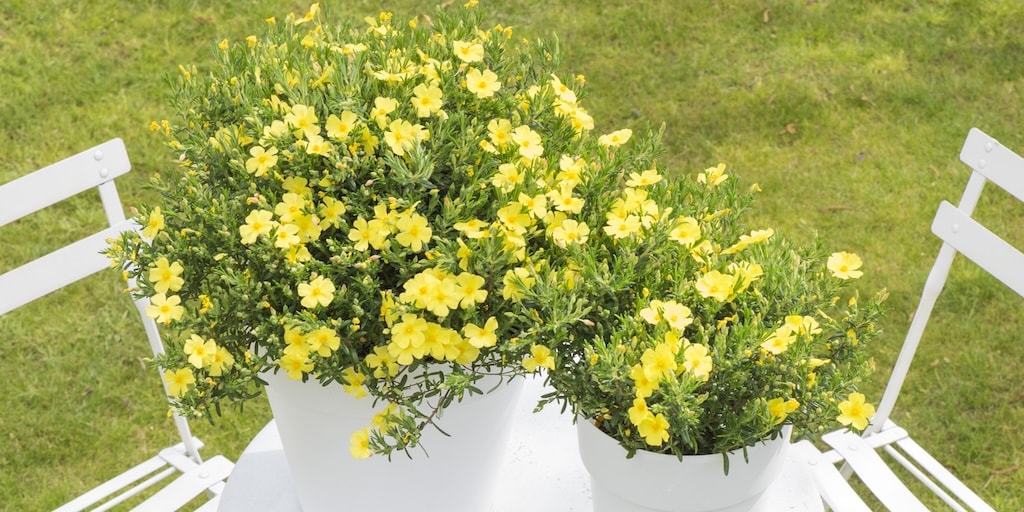
Image: Halimium ‘April Sun’ from Dobies
We asked Mandy Bradshaw, an award-winning garden journalist, for her top tips on the best evergreen shrubs. Here are the varieties she chose…
- Crinodendron hookerianum – known as the Chilean Lantern Tree due to its red, lantern-shaped flowers. The evergreen leaves are glossy green.
- Halimium ‘April Sun’ – easy to grow and ideal for ground cover in dry spots. It has sunny yellow flowers that last for weeks.
- Vinca minor ‘Bowles’s Variety’ – reliable and easy, this spreading shrub will create dense ground cover. It has glossy green leaves and purple flowers from late spring through summer.
Best flowering shrubs
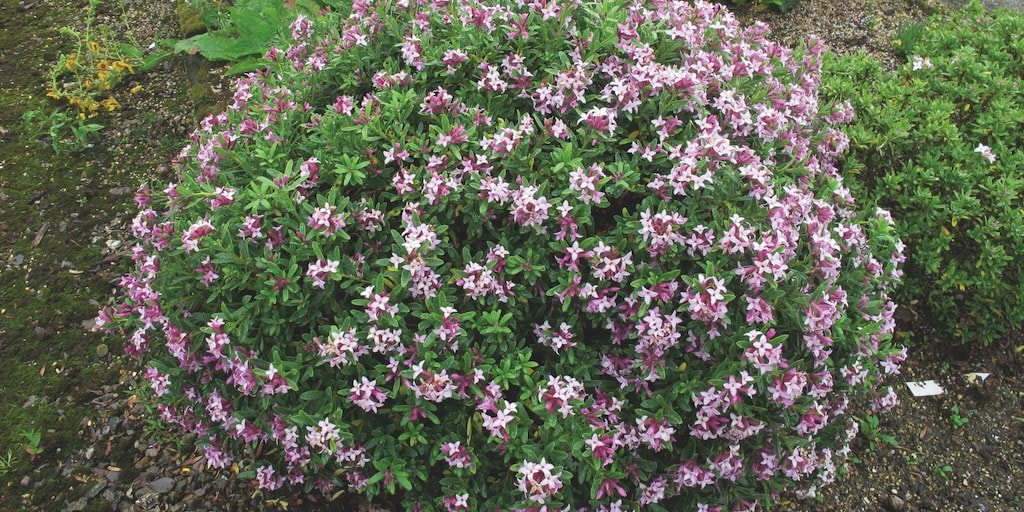
Image: Daphne x transatlantica ‘Pink Fragrance’ from Dobies
Mandy Bradshaw suggests these flowering shrubs for colour, interest and scent…
- Rosa ‘Blue for You’ – a rose with unusual semi-double flowers of lilac blue. It’s scented and easy to grow.
- Honeysuckle ‘Dart’s World’ – a long flowering period from May to August and richly scented blooms that are dark pink in bud, fading to blush pink and creamy yellow. A strong growing variety that is semi-evergreen.
- Daphne ‘Pink Fragrance’ – a daphne that has the usual lovely scent but which flowers from April to November. It can be grown in a pot or border.
Best shrubs for patio containers
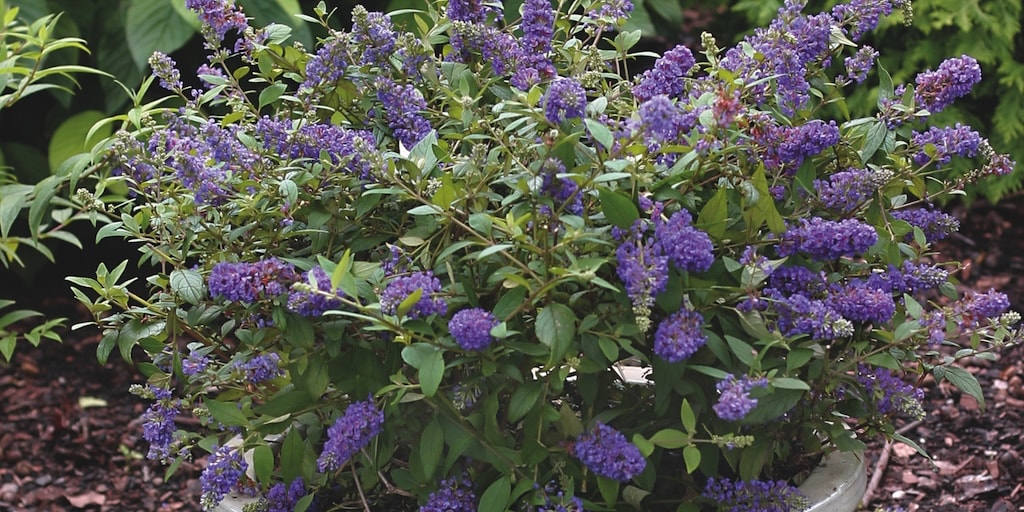
Image: Buddleja ‘Blue Chip’ from Dobies
You don’t need a large garden to grow shrubs. Here are the varieties that garden expert Mandy Bradshaw recommends for container growing…
- Weigela Towers of Flowers® ‘Cherry’ – the upright habit of this flowering shrub makes it ideal for a container. It flowers from top to bottom with stunning cherry-red blooms.
- Nandina domestica ‘Fire Power’ – a dwarf form with white, star-like flowers followed by red berries. An evergreen, it also has good autumn colour.
- Buddleja ‘Blue Chip’ – this mound-forming variety will spread about 60cm. It has scented, blue flowers that are a magnet for butterflies and other pollinating insects.
Best shrubs for shady areas
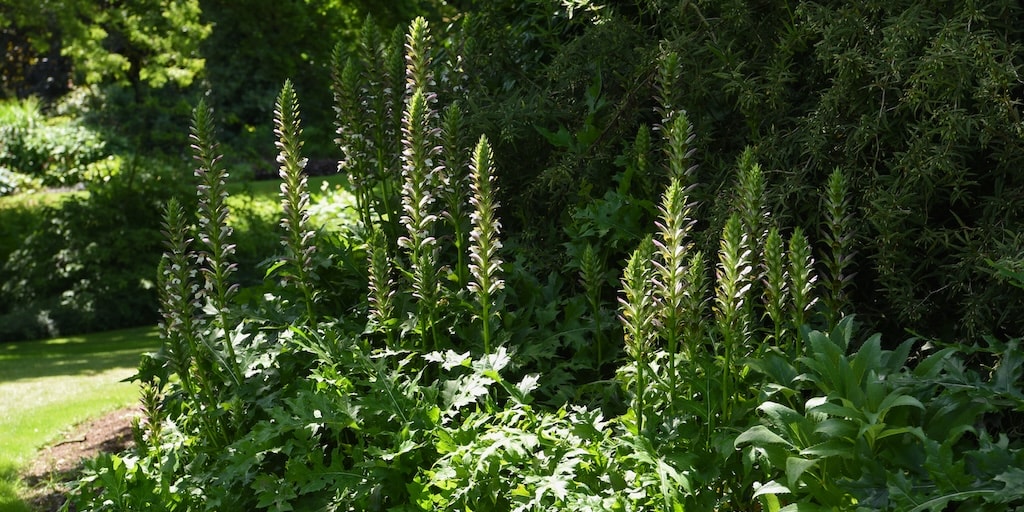
Image: Acanthus mollis from Dobies (© T&M)
Shrubs are the perfect way to add interest to a shady corner. Mandy Bradshaw, also known as The Chatty Gardener, suggests these varieties…
- Acanthus mollis – choose this for a striking architectural feature in a shady spot. It has purple-hooded white flowers on tall spires and serrated leaves.
- Magnolia ‘Sieboldii’ – its large white flowers with their lime green and maroon centres will light up an area of partial shade. The leaves are fresh green.
- Hydrangea ‘Endless Summer® BloomStar®’ – clusters of pompom flowers in either blue or pink depending on your soil type. It blooms on both last year’s and current growth resulting in a display that lasts many weeks.
We hope this has given you lots of ideas for shrubs to try in your own outdoor space. Why not browse our range of architectural shrubs for interesting structure and our flowering shrubs for pollinator-friendly scent and colour.